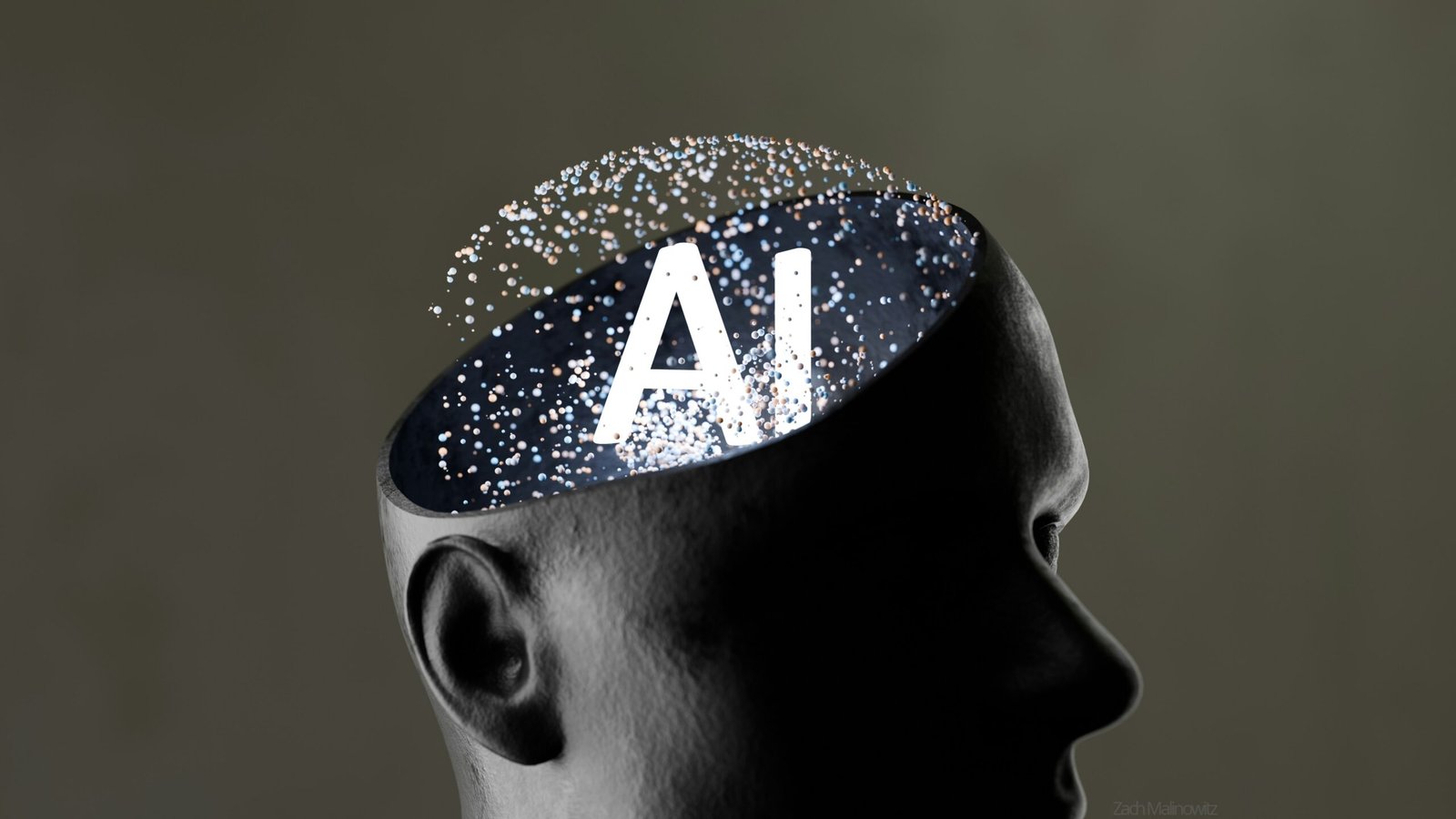
AI vs Human: Will Artificial Intelligence Replace Jobs?
Artificial intelligence is changing the workplace faster than many people expected. AI can now write text, analyze information, create images, generate computer code, answer customer questions, and automate repetitive tasks. As these technologies become more capable, an important question is becoming common among workers and business owners: Will artificial intelligence replace human jobs?
The short answer is more complicated than simply saying yes or no. AI will likely replace some tasks and may reduce demand for certain roles, but it is also creating new jobs and changing existing careers. The future of work will probably involve humans and AI working together rather than machines completely replacing everyone.
How AI Is Changing Jobs
AI is already being used across many industries. Companies use artificial intelligence for customer service, marketing, software development, data analysis, administration, manufacturing, finance, and content production.
Tasks that are repetitive, predictable, and based on large amounts of data are generally easier to automate. For example, AI can sort information, generate basic reports, answer common customer questions, and process routine documents much faster than a person.
This does not automatically mean the entire occupation disappears. A job often contains dozens of different tasks, and AI may automate only some of them. Instead of eliminating a position, a company may use AI to allow employees to spend more time on higher-value responsibilities.
Jobs Most Likely to Be Affected
Jobs involving repetitive digital tasks may experience significant changes as AI becomes more advanced. Data entry, basic administrative work, simple customer support, routine content production, and some repetitive analysis are examples of areas where automation can have a major impact.
However, even in these areas, humans may remain necessary for supervision, decision-making, communication, and handling unusual situations.
The important distinction is between automating a task and replacing an entire job. AI might complete one part of a worker’s responsibilities while the employee continues handling everything that requires judgment and human interaction.
Jobs AI May Create
Technology has historically created new types of work, and AI is already producing demand for new skills. Organizations need people who can develop, implement, manage, monitor, and improve AI systems.
New opportunities can appear in areas such as AI engineering, data analysis, automation, AI consulting, cybersecurity, AI governance, and model evaluation. There is also growing demand for professionals who understand both AI and a specific industry.
For example, a marketing professional who understands AI-powered automation may become more valuable than someone who only knows traditional marketing methods. The same principle applies to designers, programmers, researchers, and business professionals.
Human Skills AI Cannot Easily Replace
AI can process information quickly, but human abilities remain extremely important. Creativity, empathy, leadership, critical thinking, communication, negotiation, and emotional intelligence are difficult to reduce to simple automated instructions.
Consider a manager dealing with a team conflict. An AI system may provide suggestions, but understanding personalities, emotions, workplace relationships, and the consequences of a decision requires human judgment.
Similarly, a doctor, teacher, lawyer, designer, or business leader often needs to consider context that cannot be captured by a simple prompt. AI can support these professionals, but responsibility still requires human involvement.
AI and the Future of Office Work
Office work is likely to change significantly as AI assistants become more capable. Employees may use AI to draft emails, summarize meetings, analyze spreadsheets, prepare presentations, research subjects, and organize schedules.
This could make individual workers more productive. Instead of spending an hour creating a basic report, an employee might use AI to prepare a first version and then spend time checking the information and improving the recommendations.
The result could be a workplace where employees are expected to manage AI tools effectively rather than perform every task manually.
Why Learning AI Skills Matters
Workers do not necessarily need to become programmers or AI researchers. However, understanding how to use AI effectively can become an important professional skill.
Employees should learn how to write clear prompts, evaluate AI-generated information, identify errors, protect confidential data, and integrate AI into their existing workflows.
The most valuable skill may not be knowing one specific AI tool. Tools change quickly, so the ability to learn, adapt, and work with new technology may matter much more over the long term.
Will AI Completely Replace Humans?
It is unlikely that AI will completely replace humans across the entire economy. Instead, the workplace is likely to move toward a model where humans and AI complement each other.
A useful way to think about this is that AI can provide speed and scale, while humans provide judgment and responsibility. AI can analyze thousands of documents, but a person may still need to decide what action should be taken. AI can generate ten marketing ideas, but a human needs to determine which idea actually fits the brand and its customers.
People who learn to combine these strengths may have a significant advantage.
The Risks of AI Job Automation
AI-driven automation does create genuine challenges. Some workers may lose employment, while others may need to retrain or move into different roles. Businesses and governments will need to consider how workers can transition into new opportunities.
Education will also need to evolve. Traditional qualifications may not be enough if the skills required by employers change rapidly. Continuous learning and practical digital skills could become increasingly important throughout a person’s career.
Companies also need responsible AI policies that address privacy, bias, cybersecurity, and human oversight.
AI vs Human: Which Is Better?
The answer depends on the task. AI is extremely good at speed, pattern recognition, automation, and processing large amounts of information. Humans are better at understanding emotions, complex social situations, ethical decisions, creativity, and real-world context.
Rather than asking whether AI is better than humans, a more useful question is: What can humans accomplish when they use AI effectively?
A skilled professional with strong AI abilities may be able to accomplish work that previously required a larger team. This could create new opportunities for freelancers, entrepreneurs, and small businesses.
How Workers Can Prepare for the Future
The safest approach is not to ignore AI. Workers can start preparing by learning how AI affects their industry and identifying tasks that could be automated.
Develop skills that complement AI rather than compete directly with it. Improve communication, problem-solving, creativity, leadership, and industry-specific expertise while also learning practical AI tools.
It is also useful to experiment. Use AI to summarize documents, brainstorm ideas, analyze information, or automate repetitive work. The more familiar you become with AI, the easier it will be to identify where it can genuinely improve your productivity.
Conclusion
Artificial intelligence will change the job market, but the future is unlikely to be as simple as AI replacing all humans. Some tasks and roles will disappear or become smaller, while new jobs and responsibilities will emerge.
The biggest advantage may belong to people who learn how to work alongside AI. Instead of competing directly with machines, workers can use AI for repetitive and information-heavy tasks while focusing their own abilities on creativity, judgment, communication, leadership, and problem-solving.
AI is not simply a job replacement technology. It is a technology that is changing what jobs look like. The professionals who adapt, continue learning, and use AI responsibly will be better prepared for the workplace of the future.